
The most common complaint from school leaders about social media is that it takes a lot of time for not much return. Posts go up sporadically, engagement is low, and the whole thing feels like a chore rather than a communications tool.
This is almost always a content strategy problem, not a time problem. Schools that do social media well aren't spending more time on it - they're spending their time differently, on content that actually resonates with parents.
Here's what works, what doesn't, and a framework you can implement without a marketing department.
What platforms should schools use?
Before deciding what to post, decide where. Most UK primary and secondary schools should focus on:
- Facebook - still the dominant platform for parents aged 30–50, which is your core audience. A Facebook page is non-negotiable.
- Instagram - growing for schools, particularly effective for visual content (photography, design work, events). Worth maintaining if you can produce consistent visual content.
- Twitter/X - declining for general school use. Useful if you're engaging with a broader education community, but low return for direct parent communications.
Better to do two platforms well than three badly. Start with Facebook and Instagram, and expand only when you have the content pipeline to support it.
The content types that perform best for schools
1. Pupil achievement and celebration posts
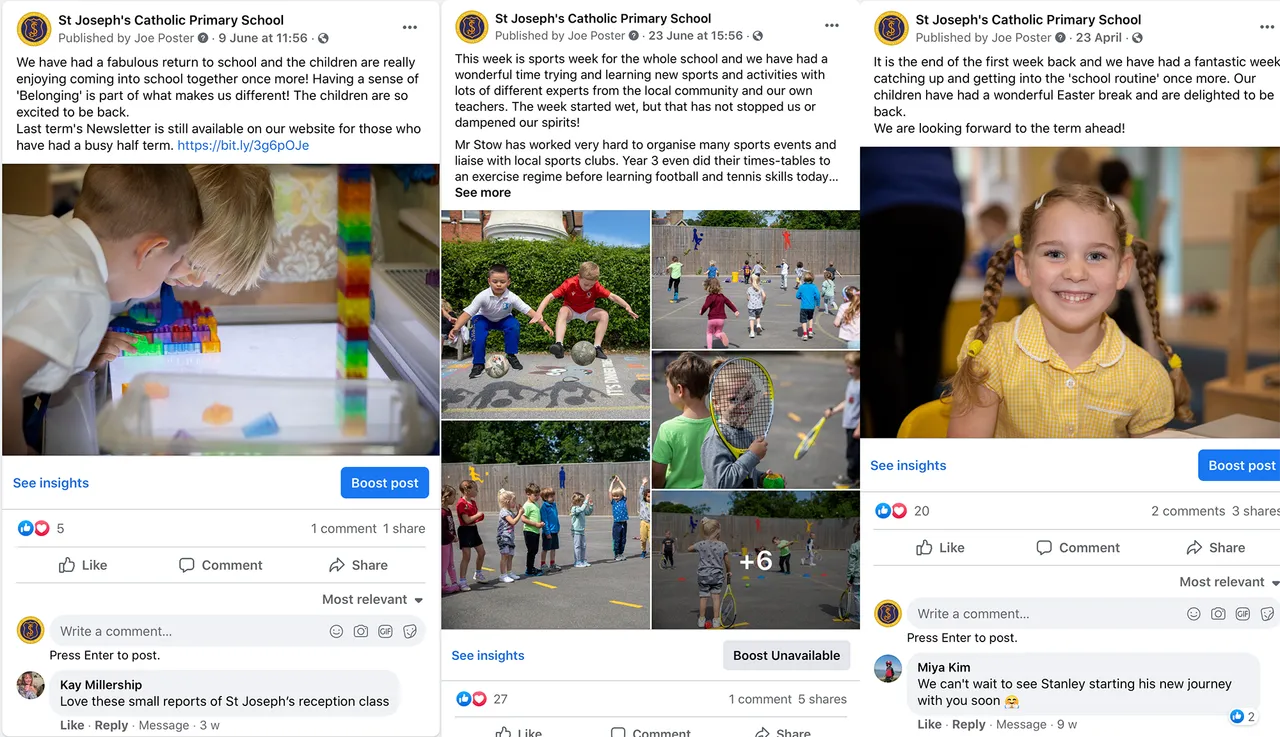
The single highest-performing content category for school social media, consistently. Posts celebrating pupil achievement - academic, creative, sporting, personal - generate strong engagement because they're shared by proud parents and family members, extending your reach beyond your existing followers.
Make these specific: "Year 4 pupils completed their first coding project this week" outperforms "great work in class this week." Include a photo where consent allows.
2. Behind-the-scenes learning moments
Photos and short clips of authentic learning - a science experiment, a creative writing lesson, a PE session - perform well because they give prospective parents a window into what the school day actually looks like. This is your most effective admissions content, working quietly all year round.
These don't need to be professionally photographed (though professional photography gives you better images for this). A good smartphone photo with natural light, taken in the moment, is enough.
3. Community and events
School events - sports days, nativities, science fairs, charity fundraisers, open days - are natural social media content. Post before (to build awareness and attendance), during (live feel), and after (celebration and reach).
Event content also dates well. A post about last year's Christmas performance is still worth sharing in November this year as a reminder of what to expect.
4. Seasonal and curriculum content
Content tied to the time of year - Black History Month, Science Week, Children in Need, World Book Day - gets organic visibility because people are already searching for and sharing content around these themes. Don't miss these opportunities.
5. Staff introductions and team content
Occasional posts introducing staff - a new teacher, a teaching assistant who's been at the school for 20 years - add warmth and personality to your account. These tend to get high engagement from the school community and help prospective parents feel familiar with the team before they visit.

The content framework: 60/30/10
A simple ratio that works well for school social media:
- 60% community content - pupil achievements, class activities, events, community milestones. Content that celebrates the school community.
- 30% educational / informational content - school news, term dates, curriculum updates, tips for parents, reading lists. Useful content that adds value.
- 10% promotional content - open day announcements, admissions reminders, new service launches. Direct calls to action.
Most schools get this backwards - too much promotional content, not enough celebration. Parents follow school social media to feel connected to their children's day, not to receive announcements. Give them what they want and they'll stay engaged.
Worth knowing
The schools winning on social media in Kent aren't posting every day. They're posting consistently twice a week with high-quality photography and clear, warm copy. Consistency over volume, every time.
How often should schools post?
Consistency matters more than frequency. A school that posts 3 times per week, every week, will outperform a school that posts 10 times one week and nothing for three weeks.
A realistic target for most schools:
- Facebook: 3–5 posts per week during term time
- Instagram: 3–4 posts per week during term time
During holidays, it's fine to reduce to 1–2 posts per week - key dates, reminders, and seasonal content. Don't go completely quiet.
What not to post
Some categories of content consistently underperform or create problems:
- Re-shared generic content. Sharing quotes, memes, and content from other pages looks like you have nothing to say of your own. Fill your own calendar with original content first.
- Long text posts without images. Social media is a visual medium. A post with no image gets a fraction of the reach.
- Content without parental consent covered. Always verify your consent records before posting identifiable images of children. One problem post can undermine months of trust-building.
- Complaint responses in public. Never engage with negative comments or complaints publicly on social media. Acknowledge privately, resolve offline.
- Overly corporate or formal language. Social media should feel conversational. Write how people talk.
Scheduling tools that save time
Batch your social media creation and use a scheduling tool - Meta Business Suite (free, covers Facebook and Instagram), Buffer, or Hootsuite all work for schools. Spend an hour at the start of each week creating and scheduling 3–5 posts. This is far more efficient than posting reactively and ensures consistency during busy periods.
When to consider outsourcing
If you're consistently not posting because there's no time, or posting and seeing low engagement because the strategy isn't working, outsourcing to a specialist school social media service makes sense.
A good school social media service will create content, manage scheduling, respond to comments, and report on what's working - freeing up school staff to focus on teaching.
Find out more about our school social media management service, or get in touch for a free consultation.