
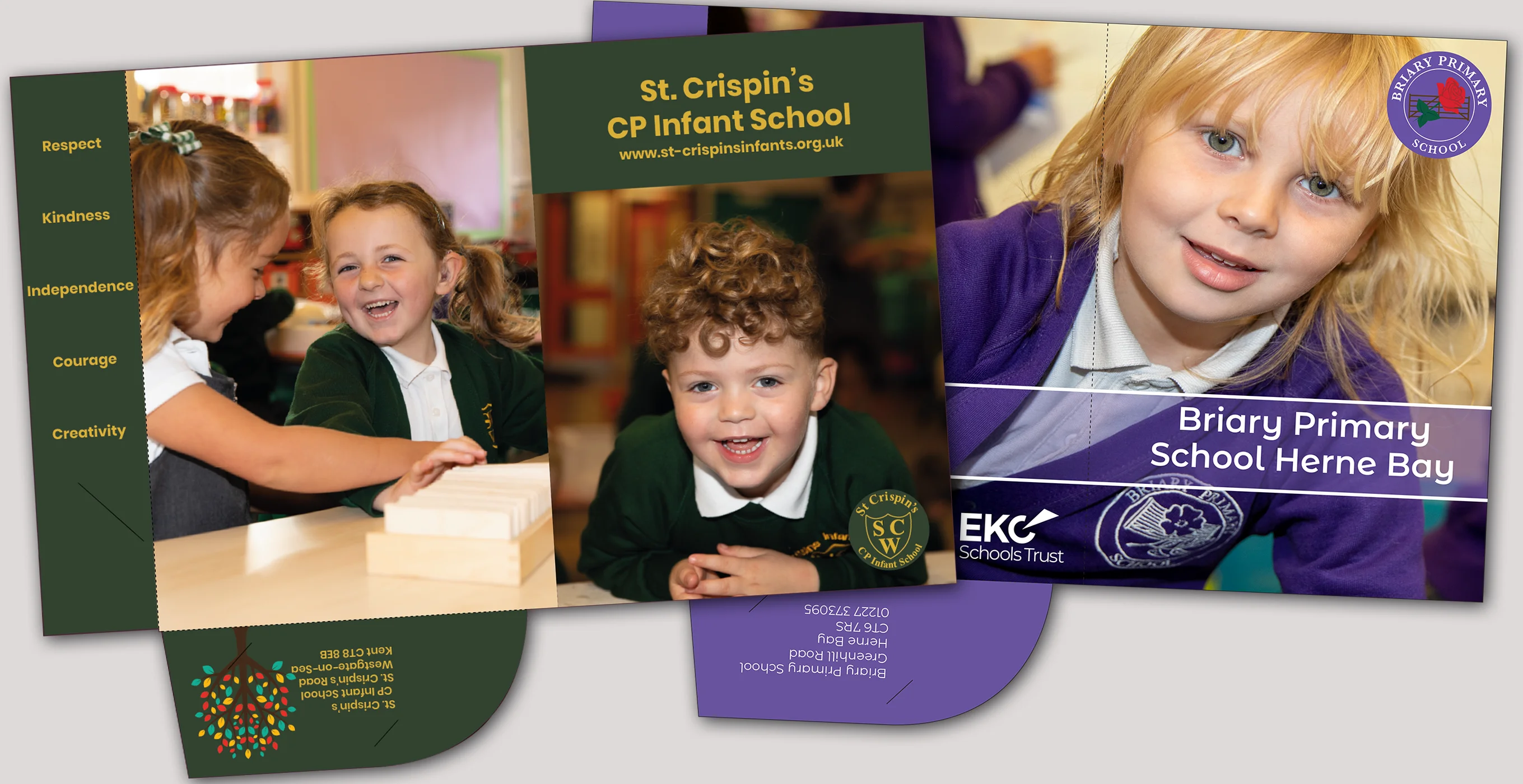
The school prospectus is one of the most important marketing documents a school produces. It sits on the kitchen table of every family who visits an open day, gets emailed to parents weighing up their choices, and often makes the difference between a school getting onto a shortlist - or not.
Despite this, most school prospectuses are produced as a compliance exercise rather than a marketing one. They're dense, committee-written, and updated reluctantly every few years. The schools getting the most out of their prospectus treat it differently - as a considered first impression that earns its place in every admissions conversation.
Here's what should be in a school prospectus - and how to make it work harder for your school.
The must-haves: statutory requirements
UK schools are legally required to publish certain information. A prospectus is a good place to reference this, though the detailed statutory content should live on your website where it can be updated without reprinting.
Required information includes:
- Admissions policy and how to apply
- Ofsted rating and a link to the full report
- School term dates and times
- Contact details and who to contact for admissions
- SEN provision overview
- Safeguarding and child protection statement
These don't need to dominate the prospectus. A brief, signposted summary with a URL to the full detail on your website is more useful - and easier to keep current.
The sections that work hardest for admissions
Beyond the legal requirement, the prospectus should answer the questions every prospective parent is actually asking: Is this school right for my child? Will my child be happy here? Will they make friends and learn well?
Your school's character and values
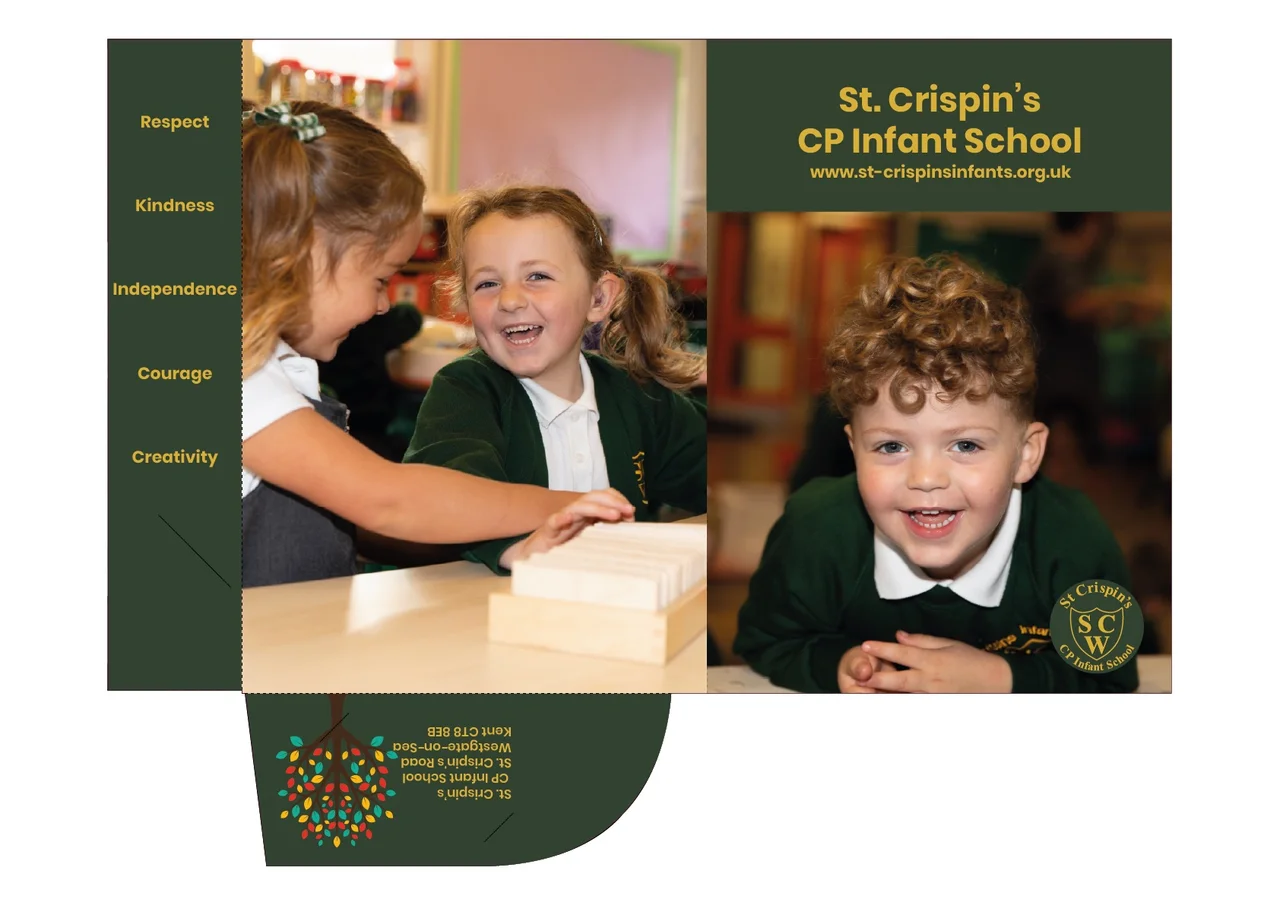
This should come first and set the tone for everything that follows. Not a list of your values - a genuine sense of what makes your school itself. The best way to communicate this is through photography and short, authentic quotes from pupils, parents and staff.
Avoid generic statements like "we believe every child can achieve." Every school says this. Write something specific to your school - a philosophy, an approach, a way of doing things that's genuinely yours.
Academic life and curriculum highlights
Parents want to understand what their child's day will look like. Rather than a full curriculum list, highlight the things that make your school's academic offer distinctive - specialist teaching, enrichment programmes, approaches to reading or numeracy, particular curriculum strengths.
Attainment data helps, but it's rarely what makes parents choose a school. Context matters more - what are you doing with those results, and what's the trend?
Pastoral care and wellbeing
This section consistently outperforms academic content in parent research. Every parent's primary concern is whether their child will be happy and well cared for. Explain your pastoral structure, how you handle transition, how parents communicate with teachers, and what you do when things are difficult.
Enrichment and extracurricular
Clubs, trips, performances, sports - list them, and show them in photographs. Breadth here signals a rich school life, which is what parents want for their children and what children care about most.
Admissions process
Make this section easy to find and easy to follow. Prospective parents are busy; a clear, numbered process with key dates and a direct call to action ("call us on X" or "email X to arrange a visit") converts interest into visits.
What to leave out
Just as important as what to include is what to leave out. Prospectuses that try to include everything become unreadable.
- Long policy summaries. Reference them and link online.
- Generic stock photography. Parents can tell. Use your own photography or nothing at all.
- Committee-written copy. If five people wrote a paragraph, it reads like five people wrote it. Assign ownership of the copy to one person and give them editorial control.
- Outdated statistics. An Ofsted report from several years ago is not a selling point. If it's old, leave it out or reference it with context.
- The head's full letter. A short, personal head's message (150–200 words) adds warmth. A 600-word corporate address adds bulk.
Worth knowing
The schools with the strongest admissions in Kent aren't necessarily the highest-performing academically. They're the ones that communicate their story most clearly - and a well-designed prospectus is central to that.
Design principles that matter
A good school prospectus is a design document as much as a writing one. Key principles:
- Consistent photography. All photos should feel like they came from the same place at a similar time. Mixed quality - some professional, some phone snaps - undermines the whole document.
- Brand consistency. Fonts, colours and layout should match your website. A prospectus that looks completely different to the website creates cognitive dissonance.
- White space. Less is more. A prospectus with generous white space looks confident and considered. Cramming everything in looks stressed and under-resourced.
- Clear hierarchy. Headlines, subheadings, body copy, captions - each should be visually distinct so readers can scan and navigate easily.
Print vs digital
Produce both. A print version for open evenings and visits, a PDF download for your website. They can share the same design and content - the main adaptation needed is that print can use full bleeds and heavier paper stock, while the digital PDF needs to be accessible (tagged) and load quickly.
Don't embed video in your PDF - it creates accessibility and file-size problems. Link to your video content from the digital version instead.
How often to update
Every 2–3 years for a full redesign. Annually for photography and key copy updates (leadership changes, major new initiatives, updated results).
The most common mistake is using photography that's 5+ years old. Parents notice, and it creates a mismatch between the prospectus and what they see on an open day. An annual photography refresh is far cheaper than reprinting the whole document - and makes a significant difference.
If you're reviewing or redesigning your school's prospectus, our school design and print service covers concept to delivery. Get in touch for a free initial consultation.
Frequently asked questions
How long should a school prospectus be?
Most effective school prospectuses are 8–16 pages. Shorter is usually better - parents are busy and scan rather than read. A well-designed 8-page prospectus with strong photography outperforms a dense 24-page document.
Should a school prospectus be print or digital?
Both. A print version for open evenings and visits, a PDF download for your website. They can share the same design and copy - the key difference is that your digital version should be accessible (tagged PDF) and the print version should be optimised for your target specification.
How often should a school update its prospectus?
Every 2–3 years for a full redesign, with annual photography and copy updates in between. The biggest mistake schools make is using photos that are 5+ years old - prospective parents notice, and it creates a mismatch between the document and what they see on an open day.